
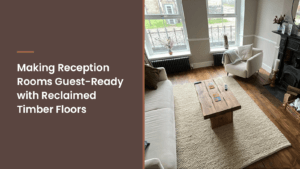
Making Reception Rooms Guest-Ready with Reclaimed Timber Floors
The invitations are out, the dates are in the diary, and the reception rooms need to work hard for the next few weeks. If you
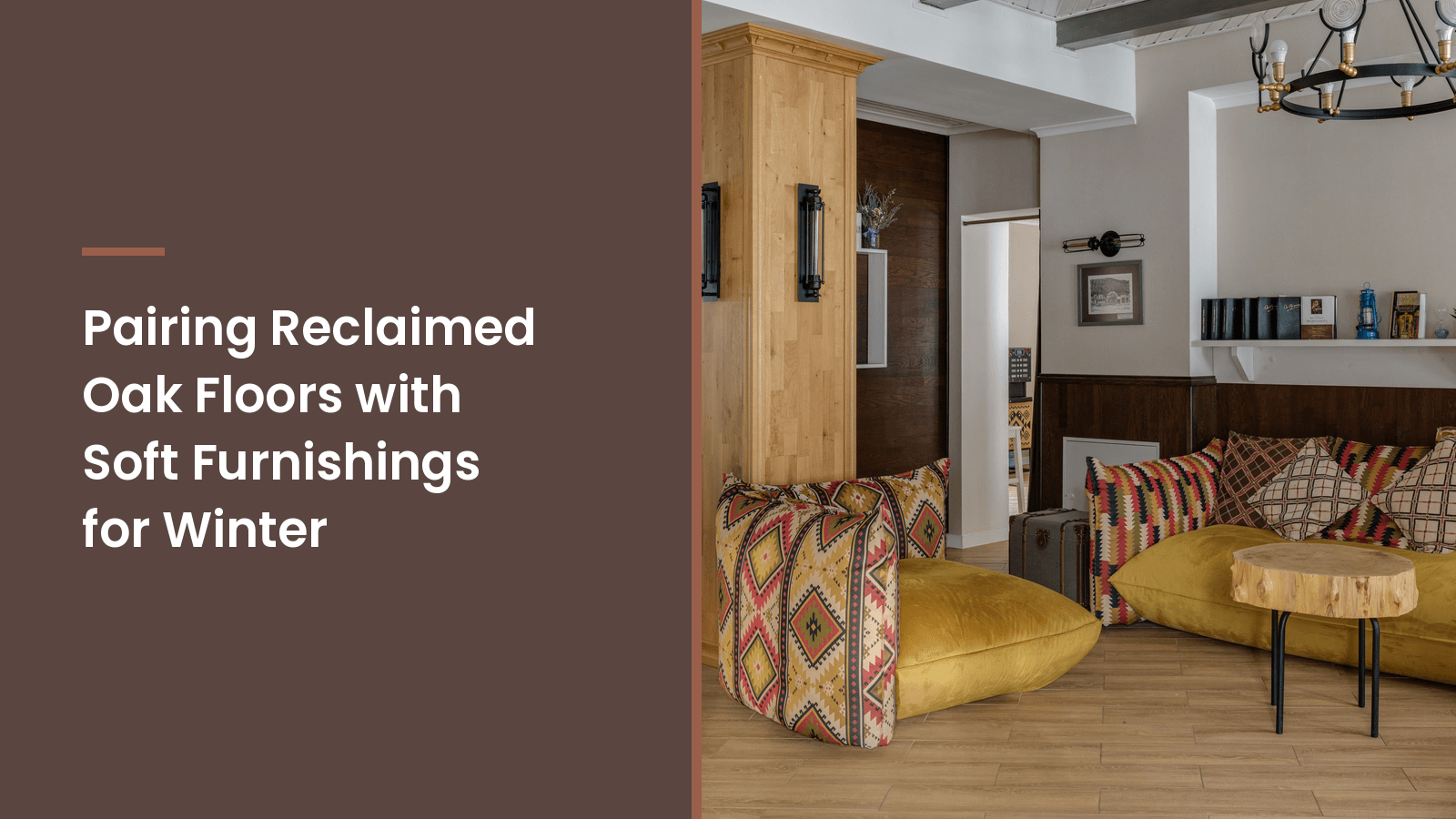
Reclaimed oak brings warmth to a room all year, but in November the rest of the room has to catch up. Bare windows, thin cushions and summer cottons can leave a room with a beautiful floor still feeling cold. The answer is layering soft furnishings that complement the oak instead of competing with it.
This guide covers texture, colour, rugs, curtains and upholstery, with a few practical points on safety and care along the way.
Old oak has a tactile surface: open grain, softened edges and the marks of a long working life. Soft furnishings with a similar honesty sit well against it. Think wool, boucle, chunky knits, heavy linen and velvet.
Smooth, shiny synthetics tend to look flat next to aged timber. If you mix in one glossy piece, such as a satin cushion, balance it with two matt textures nearby.
Reclaimed oak usually ranges from honey to deep amber and grey-brown, depending on age and finish. Winter colours that flatter these tones include:
For more on reading your floor’s undertone, see matching wood tones to your style.
A large rug adds warmth underfoot in winter, but it should frame the oak rather than replace it. Leave a clear band of boards around the edge, and choose a rug with a pattern or texture that picks up one colour from the timber.
Flat-weave wool and low-pile rugs suit reclaimed floors well because they lie flat and are easy to lift for cleaning. Always use a non-slip underlay. The NHS lists loose rugs as a trip hazard, and an underlay also protects the finish from grit trapped beneath.
Full-length curtains in a heavier fabric make a room feel cosier and help hold warmth in on cold evenings. Let them just kiss the floor rather than pooling, so the hem does not drag dust across the boards or trap moisture against them.
Lined or interlined curtains in wool, velvet or thick linen work beautifully with oak. If you have a period room, our guide to reclaimed wood flooring for period properties covers how to keep the look authentic.
Throws and cushions are the easiest seasonal change. Group cushions in threes or fives, mixing one solid, one textured and one patterned piece. Drape a wool throw over the arm of a sofa or the end of a bench so it is close at hand.
When buying new upholstered furniture or cushions, look for the permanent fire safety label. In the UK, the Furniture and Furnishings (Fire) (Safety) Regulations 1988 set fire resistance requirements for upholstered furniture and filled items such as cushions and pillows supplied for domestic use.
Winter often means rearranging seating closer to the fire. Fit felt pads to sofa and chair legs before you move anything, and lift heavy pieces rather than dragging them. If the finish needs refreshing after the season, read what to expect when refinishing reclaimed wood floors.
If you are planning a room around the warmth of old timber, explore our reclaimed flooring range or contact our team for advice on boards to suit your space.
The invitations are out, the dates are in the diary, and the reception rooms need to work hard for the next few weeks. If you

As autumn turns towards the festive season, many of us start planning gatherings: Sunday lunches, birthday parties and the inevitable run of Christmas visitors. Your
Hallways, kitchens and boot rooms take a real battering once the clocks go back. Wet boots, grit from the garden path, dogs coming in from
Reclaimed wood flooring brings unparalleled character, rich history, and sustainable beauty to any interior. Whether you are restoring a period property or adding warmth to